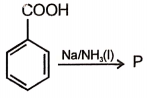
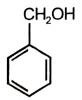
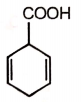
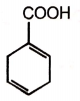
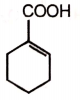
Number of secondary alcoholic groups that are attached to the ring in the major product of the given reaction is/are:


1.  Three

2.  Four

3.  Two

4.  One

Subtopic:  Aldehydes & Ketones: Preparation & Properties |
 59%
Level 3: 35%-60%
Hints

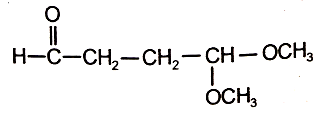
An organic compound (A) of the molecular formula C6H12O3 gives a positive Iodoform test but does not reduce Tollen's reagent. When (A) is subjected to acid-catalyzed hydrolysis, another compound B is formed which gives positive Tollen's test. Identify the unknown compound (A).

1.       
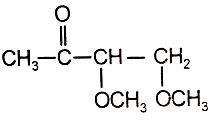
2.  
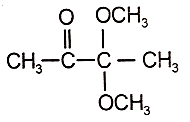
3.  
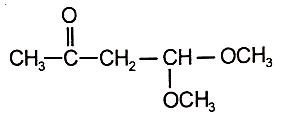
4.  
Subtopic:  Name Reaction |
 55%
Level 3: 35%-60%
Hints

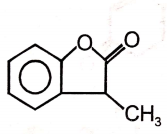
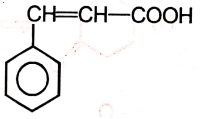
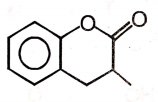
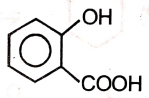
PH-CHOCH3COONa/H2OCH3-CO2OA
TheprodctAis

1.        2.   

3.          4.  

Subtopic:  Aldehydes & Ketones: Preparation & Properties |
 61%
Level 2: 60%+
Hints

advertisementadvertisement

C2H4O3/Zn/H2O2ProductA

Product (A) can give

1. Haloform test

2. Aldol condensation

3. Cannizaro reaction

4. Both (A) & (B)

Subtopic:  Aldehydes & Ketones: Preparation & Properties |
 71%
Level 2: 60%+
Hints

Consider the following reaction,


The B and C are respectively:

1.  RCHO and HCHO

2.  RCOOH and HCOOH

3.   RCH2OH and CH3OH

4. 

Subtopic:  Aldehydes & Ketones: Preparation & Properties |
 76%
Level 2: 60%+
Hints

CH3NO23Cl2+ 3NaOH P. 'P' is

1. CCl3CHO

2. CCl3NO2

3. CHCl3

4. CHCl2NO2

Subtopic:  Isomers & Reaction Mechanism |
 64%
Level 2: 60%+
Hints

advertisementadvertisement

premium feature crown icon
Unlock IMPORTANT QUESTION
This question was bookmarked by 5 NEET 2025 toppers during their NEETprep journey. Get Target Batch to see this question.
✨ Perfect for quick revision & accuracy boost
Buy Target Batch
Access all premium questions instantly

The pKa values of some of the acids are given below:

Acid  \(\mathrm{pK_a}\) Acid  \(\mathrm{pK_a}\)
-0.6 HI -10.0
4.8 \(\mathrm{HC} \equiv \mathrm{CH}\) 25
\(\overset{+}{N}H_4\) 9.4 \(H_2S\) 7.0
 

The correct order of leaving tendency of their conjugate bases is:

1. 
2.
3.
4.
Subtopic:  Acid Derivatives - Preparation, Properties & Uses |
 51%
Level 3: 35%-60%
Hints

Among the following esters. form a pair of least reactive and most reactive ester towards hydrolysis in that order
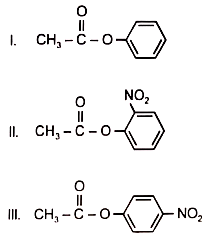
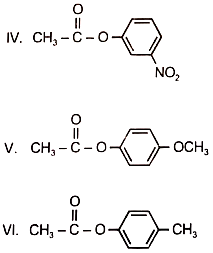
      

1.  V. III

2.  VI, II

3.  I, IV

4.  I, V

Subtopic:  Isomers & Reaction Mechanism |
 64%
Level 2: 60%+
Hints

The product which cannot be formed is:

1.
2.
3.
4.
Subtopic:  Isomers & Reaction Mechanism |
 67%
Level 2: 60%+
Hints

advertisementadvertisement

The product formed in this reaction is

1.          2.  

3.           4.  

Subtopic:  Carboxylic Acids: Preparation & Properties |
 52%
Level 3: 35%-60%
Hints