Botany - Section A
1. Consider the following statements:
| I: |
Pteridophytes are the first terrestrial plants to possess vascular bundles. |
| II: |
Main plant body in pteridophytes is sporophyte which is differentiated into true stem and leaves. |
| III: |
Genera like Selaginella and Salvinia are heterosporous. |
Which of the above statements are true?
1. I and II only
2. I and III only
3. II and III only
4. I, II and III
2. Which of the following are likely to be present in deep sea water?
1. Eubacteria
2. Blue-green algae
3. Saprophytic fungi
4. Archaebacteria
3. Match each item in Column I with one in Column II and select the correct match from the codes given:
|
Column I
[Pteridophyte class] |
|
Column II
[Example] |
| A |
Psilopsida |
P |
Psilotum |
| B |
Lycopsida |
Q |
Adiantum |
| C |
Sphenopsida |
R |
Selaginella |
| D |
Pteropsida |
S |
Equisetum |
Codes:
|
A |
B |
C |
D |
| 1. |
P |
R |
Q |
S |
| 2. |
P |
R |
S |
Q |
| 3. |
P |
S |
R |
Q |
| 4. |
Q |
S |
R |
P |
4. Free-central placentation is found in?
| 1. |
Dianthus |
2. |
Argemone |
| 3. |
Brassica |
4. |
Citrus |
5. DNA does not contain:
1. Thiamine
2. Adenine
3. Cytosine
4. Guanine
6. A transverse section of a plant part shows the following features:
| I: |
Innermost layer of cortex has casparian strips. |
| II: |
Pericycle has parenchymatous cells. |
| III: |
Radially arranged two to four xylem and phloem patches. |
This transverse section must be of:
1. Dicot root
2. Monocot root
3. Dicot stem
4. Monocot stem
7. A plant with the given floral formula must belong to:
% ⚥ K(5) C1+2+(2) A(9)+1 G1
1. Fabaceae
2. Solanaceae
3. Brassicaceae
4. Liliaceae
8. If Adenine makes 30% of the DNA molecule, what will be the percentage of Thymine, Guanine and Cytosine in it?
| 1. |
T:30 ; G:20 ; C:20 |
2. |
T:20 ; G:25 ; C:25 |
| 3. |
T:20 ; G:30 ; C:20 |
4. |
T:20 ; G:20 ; C:30 |
9. What would be true for the events shown in the given diagram?

| I: |
A possible location where this could be happening is in the stroma lamellae. |
| II: |
While the membrane or lamellae of the grana have both PS I and PS II, the stroma lamellae membranes lack PS II as well as NADP reductase enzyme. |
| 1. |
Only I |
2. |
Only II |
| 3. |
Both I and II |
4. |
Neither I nor II |
10. Productivity is the rate of production of biomass expressed in terms of :
i.
ii.
iii.
iv.
| 1. |
ii |
2. |
iii |
| 3. |
ii and iv |
4. |
i and iii
|
11. Consider the two statements:
| Assertion (A): |
The ‘Sixth Extinction’ presently in progress is different from the previous episodes of species extinction. |
| Reason (R): |
The current species extinction rates are estimated to be 100 to 1,000 times faster than in the pre-human times |
| 1. |
Both (A) and (R) are True and (R) correctly explains (A). |
| 2. |
Both (A) and (R) are True but (R) does not correctly explain (A). |
| 3. |
(A) is False but (R) is True. |
| 4. |
(A) is True but (R) is False. |
12. In over 60 % of angiosperms, pollen grains are shed at:
| 1. |
2-celled stage |
2. |
3-celled stage |
| 3. |
4-celled stage |
4. |
1-celled stage |
13. Consider the given two statements:
| Statement I: |
In C4 plants, photorespiration does not occur. |
| Statement II: |
C4 plants do not have RuBisCO in any of their cells. |
| 1. |
Both Statement I and Statement II are correct and Statement II explains Statement I |
| 2. |
Both Statement I and Statement II are correct but Statement II does not explain Statement I |
| 3. |
Statement I is correct but Statement II is incorrect |
| 4. |
Statement I is incorrect but Statement II is correct |
14. The mRNA codons for glutamic acid and valine can respectively be:
1. UAG and UGA
2. UUU and GGG
3. GAG and GUG
4. AUG and UAC
15. Scutellum is:
| 1. |
shield shaped cotyledon in monocotyledons |
| 2. |
protein layer in the outer endosperm in monocotyledons |
| 3. |
starchy endosperm of dicotyledons |
| 4. |
stony hard seed coat in some seeds |
16. Seed dormancy is due to:
| 1. |
Ethylene |
2. |
Abscisic acid |
| 3. |
IAA |
4. |
Starch |
17. The European Federation of Biotechnology [EFB] defines biotechnology as:
| 1. |
The use of living cells and bacteria in industrial and scientific processes. |
| 2. |
The integration of natural sciences and organisms, cells, parts thereof, and molecular analogues for products and services. |
| 3. |
The use of biology to solve problems and make useful products. |
| 4. |
The use of biology to develop new products, methods and organisms intended to improve human health and society. |
18. In oogamy, fertilization involves:
| 1. |
A large non-motile female gamete and a small motile male gamete |
| 2. |
A large non-motile female gamete and a small non-motile male gamete |
| 3. |
A large motile female gamete and a small non-motile male gamete |
| 4. |
A small non-motile female gamete and a large motile male gamete |
19. Match each item in
Column-I with one in
Column-II and select the correct match from the codes given:
|
Column-I
[Infectious agent] |
|
Column-II
[Chemical nature] |
| A. |
Virus |
P. |
Abnormally folded proteins |
| B. |
Viroid |
Q. |
Nucleocapsid |
| C. |
Prion |
R. |
Low molecular weight free RNA |
Codes:
|
A |
B |
C |
| 1. |
P |
Q |
R |
| 2. |
Q |
R |
P |
| 3. |
Q |
P |
R |
| 4. |
R |
Q |
P |
20. Cells of which of the following wall layer of microsporangium possess dense cytoplasm and generally have more than one nucleus?
| 1. |
epidermis |
2. |
endothecium |
| 3. |
middle layers |
4. |
tapetum |
21. The interaction where one species is benefitted and the other is neither benefitted nor harmed is called:
| 1. |
mutualism |
2. |
commensalism |
| 3. |
competition |
4. |
amensalism |
22. In the DNA molecule:
| 1. |
The total amount of purine nucleotides and pyrimidine nucleotides is not always equal |
| 2. |
There are two strands, which run parallel in the 5' → 3’ direction |
| 3. |
The proportion of adenine in relation to thymine varies with the organism |
| 4. |
There are two strands, which run antiparallel - one in 5' → 3’ direction and the other in 3’→ 5’ |
23. What will be true for proportionate number of species representing global biodiversity?
| 1. |
The number of lichens is much more than the number of algae |
| 2. |
The number of mosses is much less than the number of ferns and allies |
| 3. |
The number of angiosperms is equal to the number of gymnosperms |
| 4. |
The number of fungi is much more than the number of algae, ferns and allies, mosses and lichens put together |
24. A unicellular organism shows:
| I: |
Eukaryotic cell type |
| II: |
Absent cell wall |
| III: |
Capability to act as a heterotroph when deprived of sunlight |
This organism must be classified under:
| 1. |
Kingdom Monera, as a mycoplasma |
| 2. |
Kingdom Protista, as a euglenoid |
| 3. |
Kingdom Protista, as a dinoflagellate |
| 4. |
Kingdom Animalia, as a sponge |
25. The wavelengths of light most useful in photosynthesis are:
| 1. |
green and orange |
2. |
red and blue |
| 3. |
infrared and yellow |
4. |
red and green |
26. If an enzyme catalyses the removal of nucleotides from the ends of DNA, then it should be called as:
1. endonuclease
2. exonuclease
3 ligase
4. reverse transcriptase
27. Which of the following has proved helpful in preserving pollens as fossils?
| 1. |
Pollen kit |
2. |
Cellulosic intine |
| 3. |
Oil content |
4. |
Sporopollenin |
28. According to Oparin, which one of the following was not present in the primitive atmosphere of the earth?
| 1. |
Oxygen |
2. |
Hydrogen |
| 3. |
Water vapour |
4. |
Methane |
29. Which one of the following structures between two adjacent cells is an effective transport pathway?
1. Plasmodesmata
2. Plastoquinones
3. Endoplasmic reticulum
4. Plasmalemma
30. What guides the entry of the pollen tube though the micropyle into the embryo sac in the angiosperms?
1. Antipodals
2. Filiform apparatus in synergids
3. The egg cell
4. Polar nuclei
31. Alexander Fleming first isolated penicillin from:
| 1. |
Penicillium chrysogenum |
2. |
Penicillium roqueforti |
| 3. |
Penicillium notatum |
4. |
Penicillium camemberti |
32. In a transcription unit, the location of promoter is described as:
| 1. |
at the 3' end, downstream of the structural gene |
| 2. |
at the 3' end, upstream of the structural gene |
| 3. |
at the 5' end, upstream of the structural gene |
| 4. |
at the 5' end, downstream of the structural gene |
33. Microtubules are the constituents of?
| 1. |
spindle fibres, centrioles and cilia |
| 2. |
centrioles, spindle fibres and chromatin |
| 3. |
centrosome, nucleosome and centrioles |
| 4. |
cilia, flagella and peroxisomes |
34. Regarding the gradients of biodiversity:
| I: |
As we move from poles to the equator, broadly speaking, biodiversity decreases. |
| II: |
There is an increase in species diversity from lower to higher altitudes. |
1. Only I is correct
2. Only II is correct
3. Both I and II are correct
4. Both I and II are incorrect
35. The given Figure 1 shows a floral diagram and Figure 2 shows a floral formula. Identify the correct statement with respect to the given figures:

| 1. |
The floral diagram is for Family Fabacea and the floral formula is for Family Solanaceae |
| 2. |
The floral diagram is for Family Solaneceae and the floral formula is for Family Fabaceae |
| 3. |
Both floral diagram and floral formula are for Family Liliaceae |
| 4. |
Both floral diagram and floral formula are for Family Solanaceae |
Botany - Section B
36. DNA replication is correctly described as:
| 1. |
Semi-conservative and Continuous |
| 2. |
Semi-conservative and Discontinuous |
| 3. |
Conservative and Continuous |
| 4. |
Semi-conservative and Semi-discontinuous |
37. Which one of the following is not observed in biodiversity hot spots?
1. Endemism
2. Accelerated species loss
3. Lesser interspecific competition
4. Species richness
38. Unlike bryophytes and pteridophytes, in gymnosperms:
| I: |
there is development of ovule and later the seed |
| II: |
pollen tubes carry male gametes to archegonia |
| III: |
gametophytes do not have an independent free living existence |
| 1. |
Only I and II are correct |
| 2. |
Only I and III are correct |
| 3. |
Only II and III are correct |
| 4. |
I, II and III are correct |
39. In bacteria, extensions of the plasma membrane:
| I: |
called mesosomes help in cell wall formation and DNA replication. |
| II: |
called chromatophores contain pigments and are used to perform photosynthesis. |
1. Only
I is correct
2. Only
II is correct
3. Both
I and
II are correct
4. Both
I and
II are incorrect
40. In glycolysis, during oxidation, electrons are removed by:
1. Glyceraldehyde-3-phosphate
2. NAD+
3. Molecular oxygen
4. ATP
41. When does the growth rate of a population following the logistic model equal zero? The logistic model is given as dN/dt = rN(1-N/K):
| 1. |
when N nears the carrying capacity of the habitat |
| 2. |
when N/K equals zero |
| 3. |
when the death rate is greater than the birth rate |
| 4. |
when N/K is exactly one |
42. The type of natural selection that operates to eliminate intermediate phenotypes in a population is known as:
| 1. |
Directional selection |
2. |
Disruptive selection |
| 3. |
Stabilizing selection |
4. |
Reverse selection
|
43. Identify the correct statements regarding G1 phase of the cell cycle:
| I: |
It is the post-mitotic gap phase |
| II: |
The cell is metabolically active and grows continuously |
| III: |
Cell replicates its DNA |
| 1. |
Only II |
2. |
I and II only |
| 3. |
Only I |
4. |
I, II and III |
44. Identify the incorrect statement regarding restriction endonucleases:
| 1. |
They mostly cut dsDNA at specific base sequences. |
| 2. |
They are produced by bacterial cells as a mechanism of self-defence. |
| 3. |
They digest DNA by removing nucleotides from a free 3' end. |
| 4. |
They often generate short single-stranded sequences at the ends of the resultant fragments. |
45. Given below are two statements : one is labelled as Assertion
(A) and the other is labelled as Reason
(R).
| Assertion (A): |
Saprophytes play a vital role in the ecosystem. |
| Reason (R): |
Saprophytes are accorded the highest trophic level in a food chain or a food web. |
In the light of the above statements, choose the most appropriate answer from the options given below :
| 1. |
Both (A) and (R) are True and (R) is the correct explanation of (A). |
| 2. |
Both (A) and (R) are True but (R) is not the correct explanation of (A). |
| 3. |
(A) is True but (R) is False. |
| 4. |
Both (A) and (R) are False. |
46. Which is the most common type of embryo sac in angiosperms?
1. Tetrasporic with one mitotic stage of division
2. Monosporic with three sequential mitotic divisions
3. Monosporic with two sequential mitotic divisions
4. Bisporic with two sequential mitotic divisions
47. You discover a new fungus. On careful examination you find that the mycelium is septate and branched, they reproduce asexually by conidia and you cannot identify any sexual stage in its life cycle. To which fungal class would you place this fungus?
| 1. |
Phycomycetes |
2. |
Ascomycetes |
| 3. |
Basidiomycetes |
4. |
Deuteromycetes |
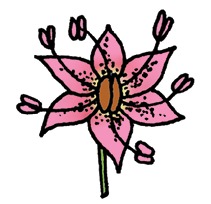
48. The flower shown in the given figure most likely is of a plant that belongs to the family:
| 1. |
Fabaceae |
2. |
Liliaceae |
| 3. |
Solanaceae |
4. |
Cruciferae |
49. In a monocot stem:
| I: |
hypodermis is collenchymatous |
| II: |
vascular bundles are conjoint and closed |
| III: |
phloem parenchyma is absent |
1. Only
I and
II are correct
2. Only
I and
III are correct
3. Only
II and
III are correct
4.
I,
II and
III are correct
50. All the following plants exhibit difference in shape of leaves in juvenile and in mature phase of their life cycle except:
1. Cotton
2. Coriander
3. Larkspur
4. Buttercup
Zoology - Section A
51. Glandular epithelium has specialised:
| 1. |
Squamous or pseudostratified cells |
| 2. |
Ciliated or brush bordered columnar cells |
| 3. |
Stratified squamous or pseudostratified cells |
| 4. |
Cuboidal or columnar cells |
52. Which of the following features will be seen in chordates but not in non-chordates?
| (a) |
A notochord |
| (b) |
Ventral, solid, and double central nervous system |
| (c) |
Pharynx perforated by gill slits |
| (d) |
Ventral heart |
| (e) |
Terminal anus and a lack of post-anal tail |
| 1. |
(a), (c), and (d) only |
2. |
(a), (b) and (e) only |
| 3. |
(a) and (c) only |
4. |
(b), (c) and (d) only |
53. The excretory product eliminated by a frog is:
| 1. |
Ammonia |
2. |
Urea |
| 3. |
Uric acid |
4. |
Creatine |
54. Consider the given two statements:
| Assertion (A): |
Many environmental scientists believe amphibians, including frogs, are good biological indicators of broader ecosystem health. |
| Reason (R): |
These organisms have intermediate positions in food chains, have permeable skins, and typically have biphasic lives (aquatic larvae and terrestrial adults). |
| 1. |
(A) is True but (R) is False |
| 2. |
Both (A) and (R) are True and (R) explains (A) |
| 3. |
(A) is False but (R) is True |
| 4. |
Both (A) and (R) are True but (R) does not explain (A) |
55. Which one of the following statement with regards to the excretion by the human kidneys is correct?
| 1. |
Descending limb of Loop of Henle is impermeable to water |
| 2. |
Distal convoluted tubule is incapable of reabsorbing HCO3 |
| 3. |
Nearly 99 per cent of the glomerular filtrate is reabsorbed
by the renal tubules |
| 4. |
Ascending limb of Loop of Henle is impermeable to electrolytes |
56. Match the following columns with reference to cockroach and select the correct option :
|
Column I |
|
Column II |
| (a) |
Grinding of the food particles |
(i) |
Hepatic caeca |
| (b) |
Secrete gastric juice |
(ii) |
10th segment |
| (c) |
10 pairs |
(iii) |
Proventriculus |
| (d) |
Anal cerci |
(iv) |
Spiracles |
|
|
(v) |
Alary muscles |
Options:
|
(a) |
(b) |
(c) |
(d) |
| 1. |
(iii) |
(i) |
(iv) |
(ii) |
| 2. |
(iv) |
(iii) |
(v) |
(ii) |
| 3. |
(i) |
(iv) |
(iii) |
(ii) |
| 4. |
(ii) |
(iii) |
(i) |
(iv) |
57. The least common of WBCs in the human blood are:
| 1. |
Eosinophils |
2. |
Lymphocytes |
| 3. |
Neutrophils |
4. |
Basophils |
58. The axoplasm inside the axon contains:
| 1. |
low concentration of K+ |
| 2. |
high concentration of negatively charged proteins |
| 3. |
high concentration of Na+ |
| 4. |
equal concentrations of Na+ and K+ |
59. Which of the following statements is true?
| 1. |
Flippers of penguins and dolphins are a pair of homologous organs |
| 2. |
Analogous structures are a result of divergent evolution |
| 3. |
Sweet potato and potato is an example of homology |
| 4. |
Homology indicates common ancestry |
60. Consider the given two statements:
| Assertion (A): |
Frogs have the capability to change the colour and resemble their surroundings. |
| Reason (R): |
They are poikilothermous animals. |
| 1. |
(A) is True but (R) is False |
| 2. |
Both (A) and (R) are True but (R) does not correctly explain (A) |
| 3. |
Both (A) and (R) are True and (R) correctly explains (A) |
| 4. |
(A) is False but (R) is True |
61. Match each item in Column I with one in Column II and select the correct match from the codes given:
|
Column I |
|
Column II |
| A |
Red muscle fibre |
P |
Excess of myoglobin |
| B |
White muscle fibre |
Q |
Excess of sarcoplasmic reticulum |
| C |
Tail of myosin |
R |
Heavy meromyosin |
| D |
Head of myosin |
S |
Light meromyosin |
Codes:
|
A |
B |
C |
D |
| 1. |
Q |
P |
S |
R |
| 2. |
P |
Q |
R |
S |
| 3. |
P |
Q |
S |
R |
| 4. |
Q |
P |
R |
S |
62. Identify the correct descending order [begin with maximum value] of the partial pressure of oxygen at different parts involved in diffusion in comparison to those in the atmosphere:
| 1. |
Atmosphere – Alveoli – Oxygenated blood – Tissues |
| 2. |
Alveoli - Atmosphere – Oxygenated blood – Tissues |
| 3. |
Atmosphere – Oxygenated blood – Alveoli – Tissues |
| 4. |
Tissues – Alveoli – Deoxygenated blood – Oxygenated blood |
63. Which fact regarding the Human Genome Project is not correct?
| 1. |
The Human Genome Project was a 13-year project coordinated by the U.S. Department of Energy and the National Institute of Health. |
| 2. |
Many non-human model organisms, such as bacteria, yeast, Caenorhabditis Elegans (a free-living non-pathogenic nematode), Drosophila (the fruit fly), plants (rice and Arabidopsis), etc., have also been sequenced. |
| 3. |
The sequence of chromosome 1 was completed only in May 2016 (this was the last of the 24 human chromosomes – 22 autosomes and X and Y – to be sequenced). |
| 4. |
The fragments were sequenced using automated DNA sequencers that worked on the principle of a method developed by Frederick Sanger. |
64. Match each item in Column I with one in Column II and select the correct match from the codes given:
|
Column I |
|
Column II |
| A |
Klinefelter’s syndrome |
P |
Autosomal recessive |
| B |
Turner’s syndrome |
Q |
44 A + XO |
| C |
Phenylketonuria |
R |
44 A + XXY |
| D |
Red green colour blindness |
S |
X-linked recessive |
Codes:
|
A |
B |
C |
D |
| 1. |
R |
Q |
S |
P |
| 2. |
Q |
R |
P |
S |
| 3. |
R |
Q |
P |
S |
| 4. |
Q |
R |
S |
P |
65. When anti B antibodies are present in the plasma and A antigens on the surface of RBCs of a person, her blood group can be:
| 1. |
A and AB |
2. |
Only A |
| 3. |
Only B |
4. |
O |
66. What would not be true regarding cartilaginous fishes?
| 1. |
In males, pelvic fins bear claspers |
| 2. |
Some of them have electric organs [Torpedo] |
| 3. |
None of them is viviparous |
| 4. |
Some possess poison sting [Trygon] |
67. Trichoderma harzianum has proved to be a useful micro-organism for:
1. bioremediation of contaminated soils
2. reclamation of wastelands
3. gene transfer in higher plants
4. biological control of soil-borne plant pathogens
68. Consider the given statements:
| I: |
Malpighian tubules are used in osmoregulation and excretion in cockroach. |
| II: |
Malpighian tubules are present at the junction of the midgut and the hindgut in the alimentary canal of cockroach. |
| 1. |
Only I is correct |
| 2. |
Only II is correct |
| 3. |
Both I and II are correct |
| 4. |
Both I and II are incorrect |
69. Match each item in Column I with only one in Column II and select the correct match from the codes given:
|
Column I |
|
Column II |
| A |
Limbless amphibian |
P |
Ichthyophis |
| B |
Oviparous mammal |
Q |
Salamandra |
| C |
Flying fish |
R |
Bony fish |
|
|
S |
Cartilaginous fish |
|
|
T |
Ornithorhynchus |
|
|
U |
Macropus |
Codes:
|
A |
B |
C |
| 1. |
P |
T |
R |
| 2. |
P |
U |
S |
| 3. |
Q |
T |
S |
| 4. |
Q |
P |
R |
70. Which of the following conditions is not a case of aneuploidy?
1. Down’s syndrome
2. Turner’s syndrome
3. Thalassemia
4. Klinefelter’s syndrome
71. GIFT is:
| 1. |
Transfer of an ovum collected from a donor into the fallopian tube of another female who cannot produce one, but can provide suitable environment for fertilisation and further development. |
| 2. |
Fertilisation outside the body in almost similar conditions as those in the body. |
| 3. |
Transfer of the zygote or early embryos (with up to 8 blastomeres) into the fallopian tube. |
| 4. |
Artificial introduction of the semen collected either from the husband or a healthy donor into the vagina or into the uterus (IUI – intra-uterine insemination) of the female. |
72. Which hypothalamic hormones are stored in and released from the posterior pituitary?
1. ADH and Prolactin
2. Oxytocin and Somatostatin
3. ADH and Oxytocin
4. Somatostatin and Somatomedin
73. Match each item in Column I with one in Column II regarding innate immunity and select the correct match from the codes given:
|
Column I |
|
Column II |
| A |
Physical barrier |
P |
Macrophages, Neutrophils |
| B |
Physiological barrier |
Q |
Acid in stomach, saliva |
| C |
Cellular barrier |
R |
Interferons |
| D |
Cytokine barrier |
S |
Skin and mucus membrane |
Codes:
|
A |
B |
C |
D |
| 1. |
Q |
S |
P |
R |
| 2. |
Q |
S |
R |
P |
| 3. |
S |
Q |
R |
P |
| 4. |
S |
Q |
P |
R |
74. Which of the following structures or regions is incorrectly paired with its function?
| 1. |
Medulla oblongata: controls respiration and cardiovascular reflexes. |
| 2. |
Limbic system: consists of fibre tracts that interconnect different regions of brain; controls movement. |
| 3. |
Hypothalamus: production of releasing hormones and regulation of temperature, hunger and thirst. |
| 4. |
Corpus callosum: band of fibers connecting left and right cerebral hemispheres |
75. In a juxtamedullary nephron, which part dips deep into the renal medulla?
1. Malpighian corpuscle
2. PCT
3. DCT
4. Loop of Henle
76. The two key concepts of the Darwinian Theory of Evolution are:
| 1. |
Branching descent and natural selection |
| 2. |
Saltation and Catastrophism |
| 3. |
Use and disuse of organs and inheritance of acquired traits |
| 4. |
Reproductive isolation and Founder effect |
77. Which of the following has an ATPase activity?
1. Myosin head
2. Myosin tail
3. Troponin T
4. Tropomyosin
78. The yellowish fluid "colostrum" secreted by mammary glands of the mother during the initial days of lactation has abundant antibodies to protect the infant. The antibodies present belong to the class:
| 1. |
IgA |
2. |
IgG |
| 3. |
IgE |
4. |
IgM |
79. Opportunistic infections like tuberculosis and toxoplasmosis are seen in HIV positive patients when:
| 1. |
The B – lymphocyte counts becomes excessive |
| 2. |
The phagocytic cells stop functioning |
| 3. |
The T helper cell count gets very low |
| 4. |
The body starts making a large number of antibodies against HIV |
80. Match each item in Column I [Hormone] with one in Column II [Function] and select your answer from the codes given:
|
Column I
|
|
Column II
|
| A. |
ADH
|
a. |
Makes collecting duct permeable to water and urea
|
| B. |
PTH
|
b. |
Stimulates osteoclasts
|
| C. |
LH
|
c. |
Rupture of Graafian follicle leading to ovulation
|
| D. |
ANF
|
d. |
Causes vasodilation
|
Codes:
|
A |
B |
C |
D |
| 1. |
a |
b |
c |
d |
| 2. |
a |
b |
d |
c |
| 3. |
b |
a |
d |
c |
| 4. |
b |
a |
c |
d |
81. In
Rana tigrina:
| Statement I: |
The colour of dorsal side of body is generally olive green with dark irregular spots. |
| Statement II: |
On the ventral side, the skin is uniformly pale yellow. |
| 1. |
Statement I is correct, Statement II is correct |
| 2. |
Statement I is incorrect, Statement II is correct |
| 3. |
Statement I is correct, Statement II is incorrect |
| 4. |
Statement I is incorrect, Statement II is incorrect |
82. Consider the given two statements:
| Assertion (A): |
ADH prevents diuresis. |
| Reason (R): |
ADH facilitates water reabsorption from the latter parts of the tubule. |
| 1. |
(A) is True but (R) is False. |
| 2. |
Both (A) and (R) are True and (R) correctly explains (A). |
| 3. |
(A) is False but (R) is True. |
| 4. |
Both (A) and (R) are True but (R) does not correctly explain (A). |
83. Consider the given two statements:
| Assertion (A): |
It is essential for breathing that the anatomical setup of lungs in thorax is such that any change in the volume of the thoracic cavity will be reflected in the lung (pulmonary) cavity. |
| Reason (R): |
We cannot directly alter the pulmonary volume. |
| 1. |
Both (A) and (R) are True and (R) correctly explains (A). |
| 2. |
Both (A) and (R) are True but (R) does not correctly explain (A). |
| 3. |
(A) is True but (R) is False. |
| 4. |
(A) is False but (R) is True. |
84. Consider the two statements:
| Assertion (A): |
Any deviation from the normal shape of ECG indicates a possible abnormality or disease. |
| Reason (R): |
The ECGs obtained from different individuals have roughly the same shape for a given lead configuration. |
| 1. |
Both (A) and (R) are True and (R) correctly explains (A). |
| 2. |
(A) is True but (R) is False. |
| 3. |
Both (A) and (R) are True but (R) does not correctly explain (A). |
| 4. |
(A) is False but (R) is True. |
85.
| Assertion (A): |
Regular hand washing appears to be effective in reducing the transmission of common cold virus. |
| Reason (R): |
Droplets resulting from cough and sneezes of an infected person can contaminate objects and can be picked up by people's hands and subsequently carried to their eyes or nose. |
| 1. |
(A) is True but (R) is False. |
| 2. |
Both (A) and (R) are True and (R) is the correct explanation of (A). |
| 3. |
Both (A) and (R) are True but (R) is not the correct explanation of (A). |
| 4. |
Both (A) and (R) are False. |
Zoology - Section B
86. The mode of inheritance of the Mendelian disorder shown in the given pedigree chart is most likely:

1. Autosomal recessive
2. Autosomal dominant
3. Sex-linked recessive
4. Sex-linked dominant
87.
| Assertion(A): |
A patient receiving artificially acquired passive immunity is not at risk of being infected by the same pathogen later. |
| Reason(R): |
Artificially acquired passive immunity is a short-term immunization achieved by the transfer of antibodies. |
| 1. |
(A) is False but (R) is True. |
| 2. |
Both (A) and (R) are False. |
| 3. |
Both (A) and (R) are True and (R) is the correct explanation of (A). |
| 4. |
Both (A) and (R) are True but (R) is not the correct explanation of (A). |
88. Identify the structure in a male cockroach where the sperms are stored?

89. Which of the following will not be equal in normal physiological conditions?
| 1. |
Partial pressure of oxygen in deoxygenated blood and partial pressure of oxygen in tissues |
| 2. |
Partial pressure of carbon dioxide in alveoli and partial pressure of carbon dioxide in oxygenated blood |
| 3. |
Partial pressure of oxygen in oxygenated blood and partial pressure of oxygen in alveoli |
| 4. |
Partial pressure of carbon dioxide in tissues and partial pressure of carbon dioxide in deoxygenated blood |
90. The character that gives the Phylum Chordata its name is shown by:

91. For a female becoming haemophilic:
| I: |
mother of such a female has to be at least a carrier. |
| II: |
father of such a female has to be at least a carrier. |
1. Only
I is correct
2. Only
II is correct
3. Both
I and
II are correct
4. Both
I and
II are incorrect
92. The last of 24 human chromosomes to be sequenced was:
1. Chromosome 1 and completed in 2003
2. Chromosome 1 and completed in 2006
3. Chromosome X and completed in 2003
4. Chromosome X and completed in 2006
93. Which gastro-intestinal hormone acts on the exocrine pancreas and stimulates the secretion of water and bicarbonate ions?
| 1. |
Gastrin |
2. |
Cholecystokinin |
| 3. |
Gastric Inhibitory Peptide |
4. |
Secretin |
94. In which one of the following options the two examples are correctly matched with their particular type of immunity?
|
Examples |
Type of
immunity |
| (a) |
Polymorphonuclear leukocytes and monocytes |
Cellular barriers |
| (b) |
Anti-tetanus and anti-snake bite injection |
Active immunity |
| (c) |
Saliva in mouth and tears in eyes |
Physical barriers |
| (d) |
Mucus coating of the epithelium lining the urinogenital tract and HCl in the stomach |
Physiological barriers |
1. (a)
2. (b)
3. (c)
4. (d)
95. Match each item in Column I with one in Column II and select the correct match from the codes given:
|
Column I |
|
Column II |
| A |
LH surge |
P |
Menstrual flow |
| B |
Withdrawal of progesterone |
Q |
Development of follicle |
| C |
Estrogen |
R |
Ovulation |
| D |
FSH |
S |
Regeneration of endometrium through proliferation |
Codes:
|
A |
B |
C |
D |
| 1. |
P |
R |
Q |
S |
| 2. |
P |
R |
S |
Q |
| 3. |
R |
P |
Q |
S |
| 4. |
R |
P |
S |
Q |
96. Thalassemia and sickle cell anaemia are caused due to a problem in globin molecule synthesis. Select the correct statement:
| 1. |
Both are due to a quantitative defect in globin chain synthesis |
| 2. |
Thalassemia is due to less synthesis of globin molecules |
| 3. |
Sickle cell anemia is due to a quantitative problem of globin molecules |
| 4. |
Both are due to a qualitative defect in globin chain synthesis |
97. Consider the given two statements:
| Statement I: |
Protonephridia or flame cells are the excretory structures in Aschelminthes. |
| Statement II: |
Reptiles, birds, land snails, and insects are uricotelic animals. |
1.
Statement I is correct;
Statement II is correct
2.
Statement I is incorrect;
Statement II is correct
3.
Statement I is correct;
Statement II is incorrect
4.
Statement I is incorrect;
Statement II is incorrect
98. Glenoid cavity and acetabulum are parts, respectively, of:
| 1. |
Scapula and humerus |
2. |
Coxal bone and femur |
| 3. |
Scapula and coxal bone |
4. |
Coxal bone and scapula |
99. In a marriage between a male with blood group A and a female with blood group B, the progeny had either blood group AB or B. What could be the possible genotype of the parents?
1. IA i (Male) ; IB IB (Female)
2. IA IA (Male) ; IB IB (Female)
3. IA IA (Male) ; IB i (Female)
4. IA i (Male) ; IB i(Female)
100. A plasma membrane:
| 1. |
envelops only the acrosome of sperm |
| 2. |
envelops only the mid piece of sperm |
| 3. |
envelops the whole body of sperm |
| 4. |
does not envelop any part of the sperm at all |
*If above link doesn't work, please go to test link from where you got the pdf and fill OMR from there
CLICK HERE to get FREE ACCESS for 2 days of ANY NEETprep course
 Biology Prodigy Test #15 (Full Syllabus) - NEET 2024Contact Number: 8527521718